The ability to curate audiences of who could see their posts was crucial for many of our participants to access the benefits of social platforms. For example, hiding that they were queer or trans from unsupportive audiences while being able to share their identities to trusted friends meant that they could access support. However, many still faced issues to the ability to curate audiences, especially given that many platforms only offer binary public/private settings.
Let people set post-specific privacy settings
While the ability to set accounts to be public or private is good, it does not provide enough flexibility to curate audiences on its own. People are often socially obligated to allow people to follow them and this can be restrictive. Similarly, people often may not want to share something to all of their followers. As a result, people should be able to set post-specific privacy settings.
Allow the exclusion of specific people from curated audiences
Often our participants wanted to hide content from specific people, for example, many wanted to hide being LGBTQ+ from family members. As such, audience curation features should provide a block-list as well as an allow-list. This can also be helpful for more mundane situations, for example, when organising a surprise for someone.
Design audience curation features in ways that are not burdensome to use
Prior research has often found that if privacy settings are too complex, people do not use them, or misunderstand how they work. As such, it's important to design privacy affordances in ways that are not burdensome to use.
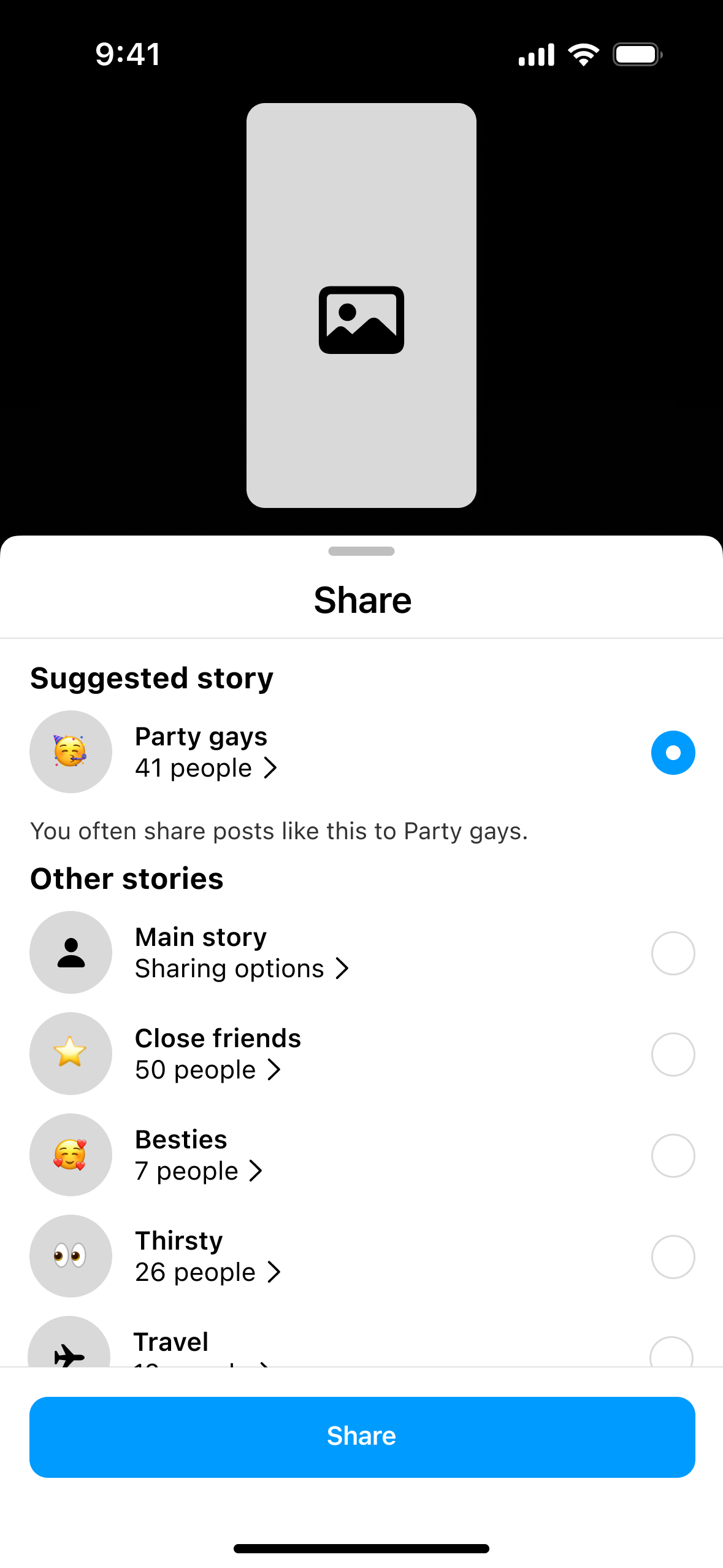
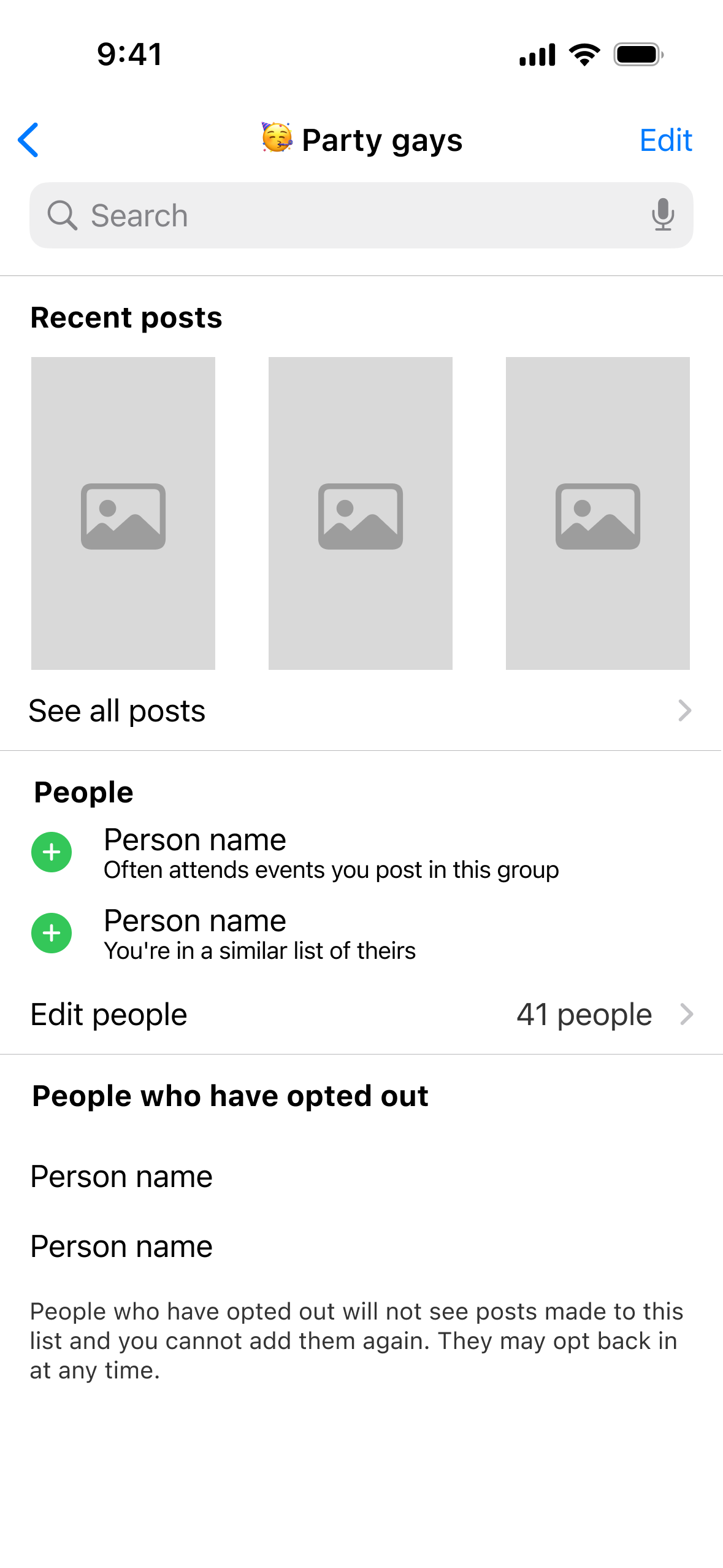
The concept Smart social circles provides an example of a way to give people flexibility over audiences that extends the binary Close Friends story feature on Instagram to allow for multiple lists. The first image on the right shows the ability to share stories to predefined lists while the second image shows how to edit lists. To reduce the burden of maintaining lists, people are suggested to be included.
Allow people to curate audiences of more than just posts
Often, peoples' accounts or interactions on a social platform show traces of their activity to others, for example, showing their account as part of a "people you may now" or "suggested accounts" feature, or broadcasting when they interact with content to their followers. While this can be helpful, it can also make it harder for people to curate audiences, and there should be a way to opt-out of creating such traces.
Obscure peoples' interactions by default
Even better than allowing people to opt-out of social platforms broadcasting their activity to followers, the sharing of such traces should be disabled by default and opt-in. Given that many people misunderstand privacy settings or who their audiences actually are and that this can often result in context collapse, obscuring peoples' activity by default is a safer option.
Build consent into audience curation features
As we discuss in the recommendation, Build consent into audience curation features, audience curation features should be designed in ways that support consent.